White paper
Caprine-Assisted Opportunistic Radio Infrastructure
Goat-borne relay nodes, entropy-coupled coverage enhancement, and empirical tower-site discovery.
Abstract
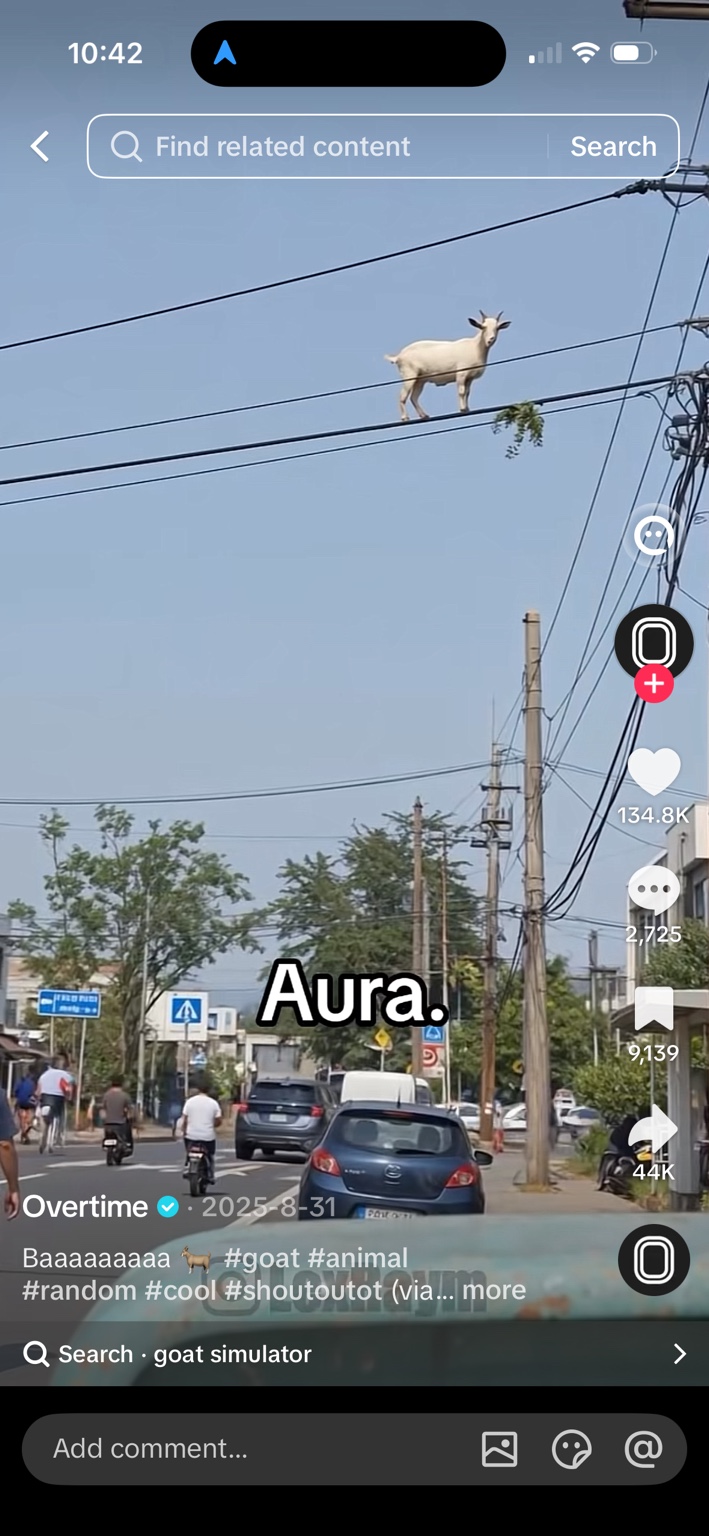
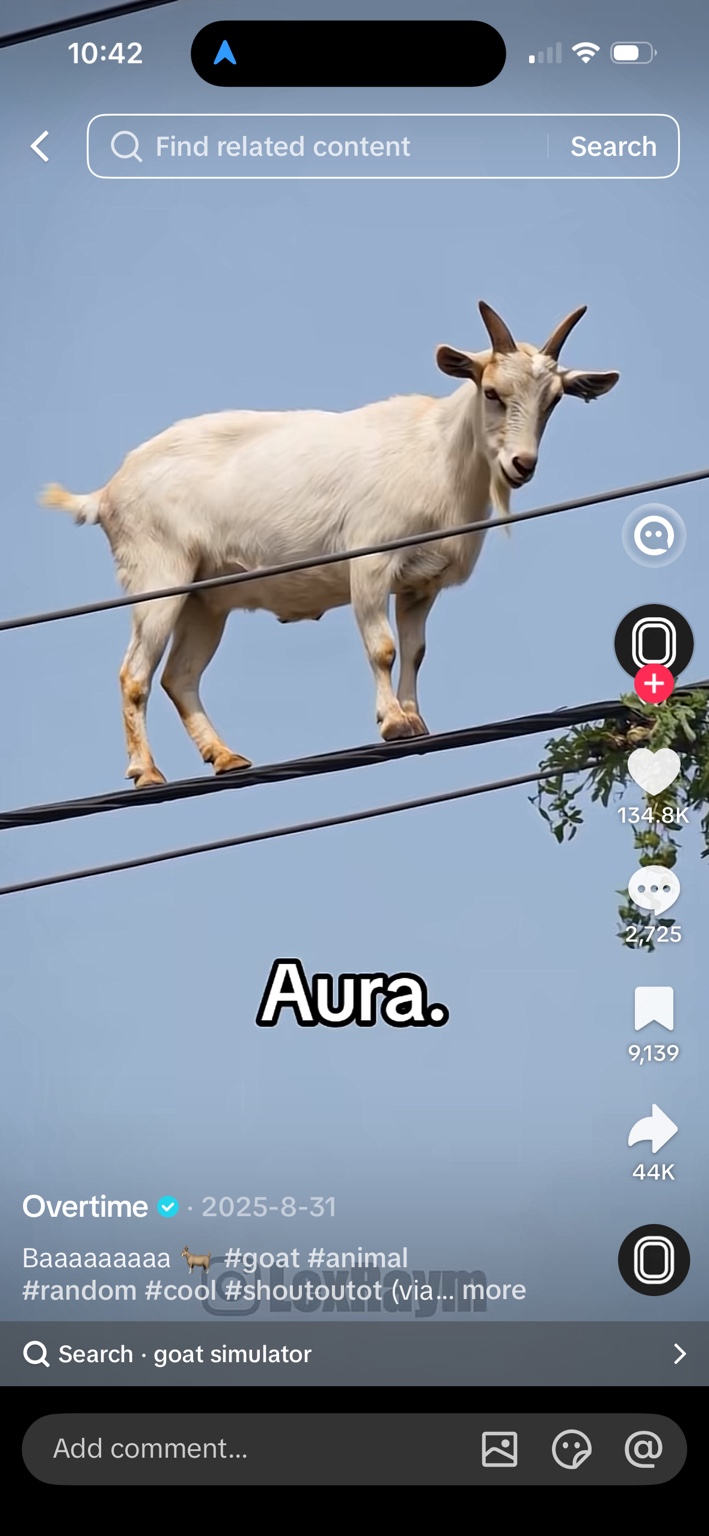
This paper proposes an unconventional research architecture in which domesticated goats carry lightweight positioning, passive radio-sensing, and optional low-power communications equipment while moving normally through controlled rural terrain. Goats often seek elevated and structurally unusual positions; some of those positions may overlap with terrain features valued by radio engineers.
The goat is not treated as reliable infrastructure. It is treated as an entropy-coupled stochastic terrain probe. When a goat occupies a favorable safe position, the system records location, dwell time, network measurements, fixed-station telemetry, and user reports. Repeated observations can generate leads for conventional tower, repeater, or fixed-node surveys.
Release enough instrumented goats into a bounded search space, observe where the network unexpectedly improves, and investigate the places where the goats may have exposed a propagation opportunity.
01 · Concept
Chaotic empirical sampling
Modern network planning uses terrain models, LiDAR, drive testing, spectrum analysis, line-of-sight calculations, and carefully selected candidate sites. Those methods remain authoritative. GoatGrid explores whether ordinary animal movement can add a cheap, persistent layer of biased sampling across ridges, rocks, sheds, cisterns, and other small local features.
The search agents are not random in a strict mathematical sense. Their movement reflects elevation, vegetation, shelter, social behavior, curiosity, perceived safety, and accessibility. The resulting samples may be biased, but the bias itself may be useful.
Animal node
Breakaway harness, GNSS, IMU, protected battery, low-power radio sensor, local logger, remote ID, and optional visible beacon.
Fixed stations
Reference measurements for RSSI, SNR, packet delivery, throughput, latency, route visibility, interference, and mesh topology.
Operations layer
Time-aligns location, motion, RF data, weather, terrain, baseline performance, and voluntary human observations.
Payload constraints
The practical payload is conservative: low-power LoRa or Meshtastic-class telemetry, passive spectrum observations, environmental sensors, and GNSS logging. Cellular or licensed-radio modules require separate legal, power, thermal, carrier, and veterinary review. Animal safety takes precedence over transmit power or feature count.
02 · Operations
Four modes, in order of plausibility
Coverage survey
The node measures the surrounding radio environment without relaying user traffic. This passive-first mode is the core research method and the appropriate starting point.
Beacon and telemetry
The node reports identity, coordinates, battery condition, altitude, motion state, and local observations. A visible beacon may assist supervised recovery but must not distract, overheat, or create entanglement risk.
Store and forward
Low-priority environmental or agricultural messages can be held locally and delivered when a fixed station becomes reachable. Latency is explicitly unbounded and unsuitable for urgent traffic.
Opportunistic relay
A low-power node may briefly connect otherwise partitioned test endpoints when link quality exceeds a threshold. This is the worst-case backup to the worst-case backup, never the primary safety network.
Entropy-Coupled Random Service Boost: a measurable link improvement that begins when an animal enters a favorable position and ends when it leaves.
03 · Discovery pipeline
From “goat present” to a real site survey
- Detect: identify a sustained improvement in SNR, packet delivery, latency, throughput, or route availability during goat occupancy.
- Repeat: require multiple visits, adequate dwell time, different animals, varied conditions, and independent measurement.
- Control: test likely confounders such as network load, weather, maintenance, interference, and movement of human users.
- Validate: install a temporary stationary mast at the candidate location and rerun conventional measurements without a goat.
- Review: assess land access, structure, power, backhaul, environment, spectrum, construction cost, and regulation.
- Propose: only persistent fixed-node gains become candidates for a repeater, passive reflector, solar mesh node, small cell, or tower.
The animal supplies a lead. An engineer establishes causality and feasibility.
04 · Analysis
Candidate scoring
I: measured improvement; D: dwell time; R: repeatability; U: independently affected users; V: variability; A: access or installation difficulty.
H: local height; T: dwell time; F: RF improvement; S: snack interruption; M: spontaneous migration likelihood.
These formulas are conceptual ranking aids, not validated scientific metrics. A pilot would preregister thresholds, preserve negative observations, and compare candidate detection against ordinary survey methods to avoid turning a joke into confirmation bias.
05 · Market
The useful business hiding inside the joke
GoatGrid is not Goat-as-a-Service and does not compete with telecom engineering. Its credible product is a low-cost field-observation layer for places where participating animals already live: ranches, conservation land, wildfire-monitoring regions, rural cooperatives, and research farms.
Survey hardware
Animal-safe sensor packs, fixed reference stations, charging and recovery tools, and deployment support.
Data service
Time-aligned maps, anomaly detection, candidate ranking, event replay, and exportable engineering evidence.
Validation service
Temporary mast tests and conventional RF studies performed by qualified partners.
Potential adjacent uses include environmental monitoring, wildfire sensing, agricultural telemetry, search-and-rescue research, delay-tolerant field data, and post-disaster mapping. Every use requires its own welfare, legal, and operational review.
06 · Governance
Limitations, welfare, and security
| Risk | Boundary or mitigation |
|---|---|
| Unpredictable mobility and no uptime | Observe rather than command movement; treat links as opportunistic and never safety-critical. |
| False correlation | Baseline first, preregister metrics, preserve null results, require repetition, and validate with a stationary mast. |
| Animal burden or entanglement | Veterinary review, conservative weight limits, rounded cool enclosures, protected batteries, and breakaway harnesses. |
| Hazardous climbing | Do not lure, train, or reward elevation; exclude utilities, roads, unstable structures, and hazardous terrain. |
| Radio and privacy regulation | Use lawful low-power equipment, minimize personal data, obtain landowner consent, and review spectrum/carrier rules. |
| Telemetry spoofing or device theft | Authenticated encrypted telemetry, tamper evidence, geofencing, and cross-validation between nodes and stations. |
| Snack-based routing attack | Never trust one goat; detect anomalous movement and require multi-animal or fixed-station confirmation. |
The goat remains an animal participating in an observational study, not a disposable biological mast. Any real protocol would require veterinary, institutional, landowner, radio-regulatory, and privacy review before field deployment.
07 · Pilot
A passive-first three-month study
Start with 10–12 goats already living on one cooperative ranch, two fixed stations, two or three known dead zones, GNSS logging, low-power telemetry, and no user-traffic relay.
Success criteria
- No adverse welfare events or behavior changes attributable to equipment.
- Reliable synchronization between animal location and fixed RF measurements.
- At least one candidate that repeats and survives stationary-mast validation.
- Transparent reporting of null results, confounders, and total operating cost.
08 · Scenario
Two valleys and an abandoned cistern
A rural community has intermittent mesh connectivity between two valleys. Fifteen supervised goats carry passive sensor nodes. For several weeks, nothing useful happens. Then Goat 9 spends forty-three minutes on a safe, abandoned concrete cistern.
- Packet delivery rises from 31% to 94%.
- Two previously isolated test nodes become reachable.
- Telemetry latency drops below five seconds.
- The event repeats four days later with Goat 3.
A portable fixed mast is installed at the cistern. The improvement persists without animals present. The location advances to structural, access, environmental, and spectrum review for a solar-powered relay.
The public report: “Candidate Site C provides favorable elevation and unobstructed line of sight.”
The internal log: “Two independent goats confirmed the survey lead.”
09 · Conclusion
Where engineers should look
Caprine-assisted radio research is not a replacement for propagation modeling, field crews, drones, towers, repeaters, or reliable emergency systems. It is a proposal to collect empirical observations from safe, lightweight sensors carried by animals already exploring difficult rural terrain.
The governing principle is simple:
When the network improves, record everything.
When a goat is present, record that too.
When both happen repeatedly, send an engineer.
In the worst case, the goat contributes nothing and the study produces a goat-movement map. In the best case, repeated observations reveal a place worth validating with real equipment. In the median case, a goat briefly improves a test link, leaves without documenting its methodology, and gives the network operations dashboard its best incident report of the quarter.