Neoriris recovery log / Forge 1.12.2 / PortalGun + SolBridge pack

Clock Tower Recovery

A 2012 Minecraft world was pulled forward into a modern Forge 1.12.2 lab, stitched to Cloudflared multiplayer, given custom PortalGun door hardware, and haunted by SolBridge: a dark orb familiar that can speak, follow, remember books, and turn natural-language designs into reversible block-by-block structures.

Server: minecraft.system42.one Access: cloudflared://minecraft.system42.one Custom mod: neoririsportaldoor 0.1.10 Custom mod: solbridge 0.4.3 live Syzygy console + SolScript GPIO Portal status: observed + watchdog refresh

Operational panels now open first: live status, install links, command references, tower controls, and Syzygy GPIO. Media, screenshots, long changelog, recipes, and narrative notes start collapsed.

Live clock widget

Current server state and in-game clock face.

This showcase page now stays read-only: it shows the server monitor and live seven-segment face without exposing the tower control buttons. Use the full control page only when you intend to operate the tower.

Open Full Control Page
Status loading
Players -- / --
Face 0000000
Manual --
Bridge --
Ping -- ms

Public read-only live tower status. Account authentication is required only on the full control page.

What this is

Recovered world, rebuilt route, custom portal hardware.

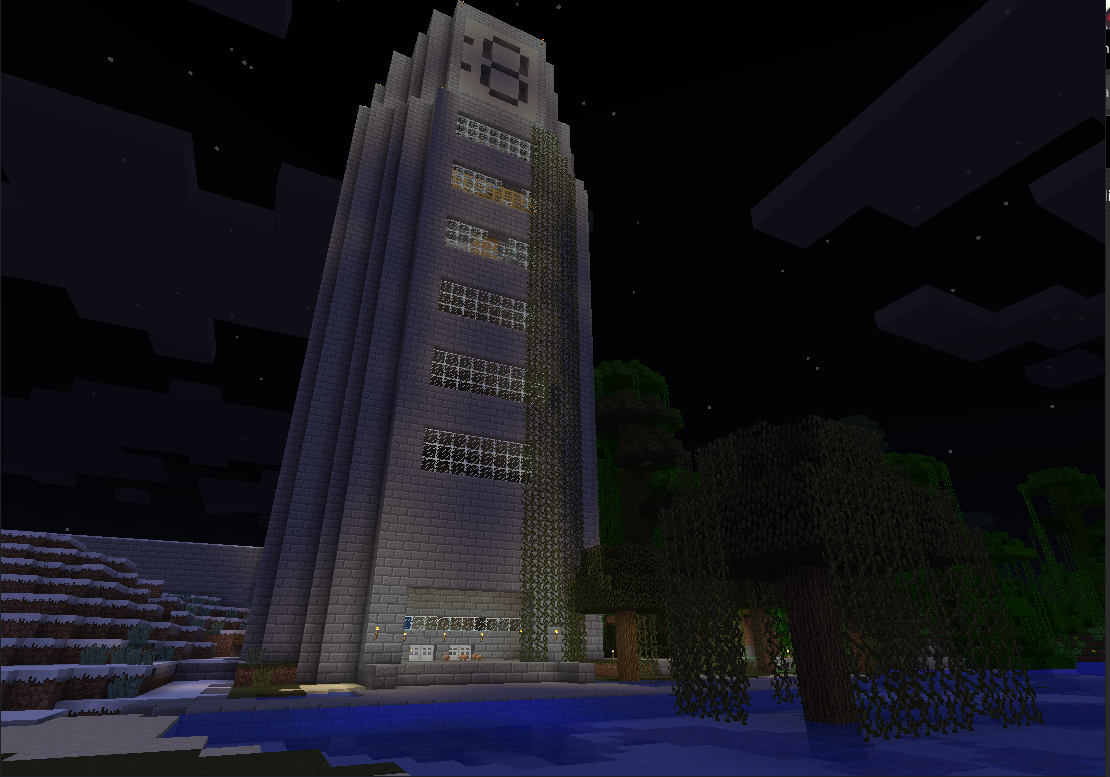
The Neoriris clock tower is an old redstone monument from a recovered Minecraft world. The current pack preserves the tower, runs it on Forge 1.12.2, and layers in PortalGun, Cloudflared multiplayer, the custom Neoriris Portal Door mod, and the custom SolBridge orb familiar.

The custom mod adds survival-craftable glowing portal buttons: Button A, Button B, and an Entangled Wall Button Pair kit. Each button can mount to a wall, floor, or ceiling and turns the largest complete rectangular surface beside it into one architectural portal. Entangled kits unpack into paired A/B buttons sharing a hidden server-generated UUID, so two players can name their routes the same thing without cross-linking portals.

Full mod stack

Every installed layer has a job.

Neoriris is a recovery lab first and a modpack second. The jar list is intentionally small: portal traversal, tunnel access, the custom lore systems, server stewardship, and enough 1.12.2 maintenance tooling to keep the clock tower alive.

Neoriris Portal Door 0.1.10

Custom Client + server mod id: neoririsportaldoor

Craftable Button A and Button B hardware appears as compact glowing portal buttons placeable on walls, floors, and ceilings. Each button detects the largest complete rectangular surface of matching blocks beside it, up to 16x16, then creates one continuous PortalGun/World Portals endpoint rather than a grid of small portals. The paired surfaces must have matching width and height because PortalGun 7.1 cannot safely persist unequal linked bounds. Empty-hand pressing latches the pair open until either detected surface is broken; redstone applied without pressing retains momentary control and a one-second close grace. Active buttons hide, lose collision, and become part of the rectangular live view, then reappear when the portal closes or fails. Neoriris-owned portals use a rectangular stencil with no oval ring, while ordinary handheld Portal Gun portals remain unchanged. Entangled Button Pair kits still unpack into matching A/B items with a hidden server-generated PairId, so route labels are lore, not identity.

Lore role: the clock tower's red/blue iris language. Lapis and redstone become addressable doors, turning old circuitry into a dimensional route board.

SolBridge 0.4.3 - Syzygy Console and SolScript GPIO

Custom Client + server mod id: solbridge

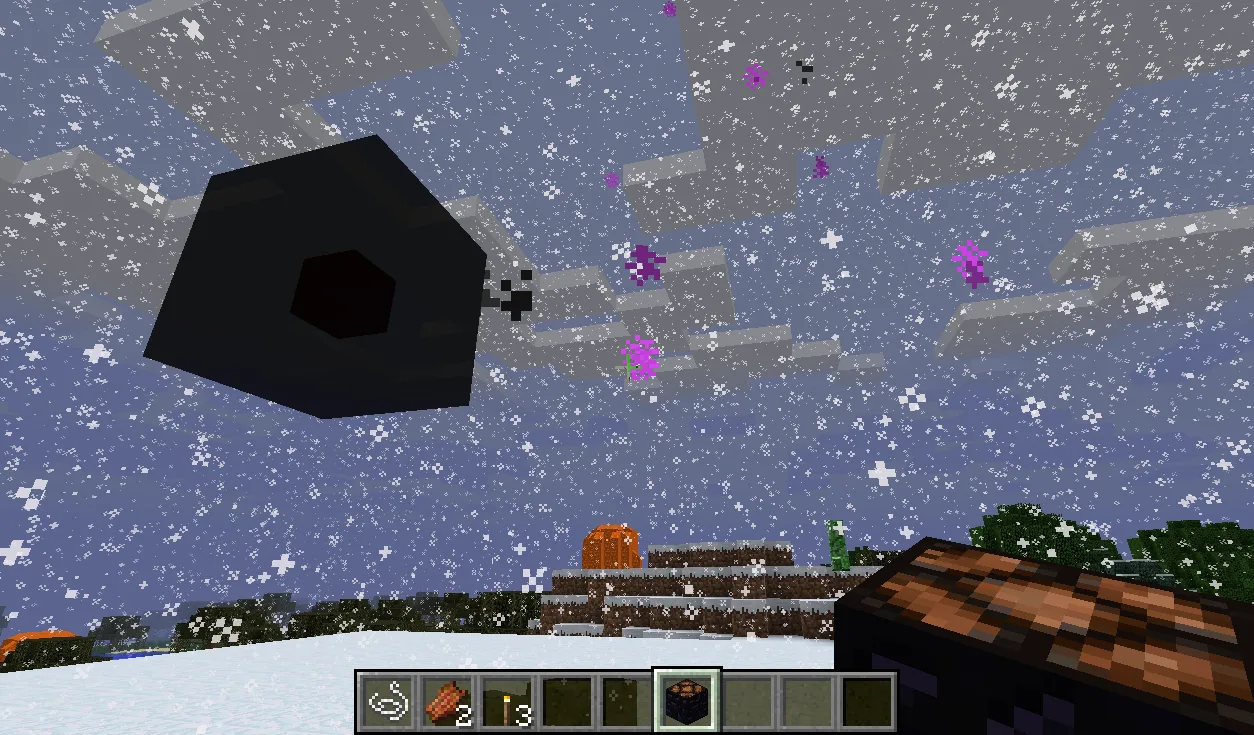
Adds Sol, a floating dark orb familiar with the three-way FOLLOW -> STAY -> FREE ROAM state cycle, persistent Gemma-planned contextual autonomy, reversible temporary builds, /sol commands, archive and inventory layers, safe JSON action execution, redstone/tower controls, music-reactive rendering, custom records, owner-only Sol Vision, and the Syzygy Console.

SolBridge 0.4.3 focuses the Syzygy Console as an in-world programming terminal: the GUI keeps live command output and scrollback in the item UI, adds Help, Self-test, and Pulse Note controls, and exposes circuit-aware help note|gpio|script|disc|commands topics. Note-block output follows a straight redstone wire run such as the current west-side console-to-note circuit.

The generated-concept skin now has an unmistakable disc mouth and three independent live lamps: amber for a loaded disc, cyan for playback, and red for the current beat, GPIO, or note pulse.

Lore role: Sol is the local shell of the noticing intelligence, and the Syzygy Console is its physical terminal: a jukebox whose CPU clock is music, whose screen is the sky, and whose data bus is redstone.

Portal traversal stack

Client + server movement layer

PortalGun 7.1.0 supplies the actual portal entities and traversal behavior. iChunUtil 7.2.2 and HammerLib 12.2.50 provide required compatibility and utility code used by the 1.12.2 portal stack.

Lore role: impossible transit. The tower stops being just a building and starts behaving like a spatial instrument with two colored mouths.

Dimensional Doors 3.2.3

Client + server dimension layer mod id: dimdoors

Dimensional Doors 3.2.3 adds rift doors, pocket dimensions, generated dungeon spaces, traps, and Limbo to the Forge 1.12.2 pack. The installed release is the current CurseForge-listed 1.12.2 Forge file, with no extra related-project dependencies listed by CurseForge and only forge declared in mcmod.info.

Lore role: a second impossible transit language beside PortalGun. Portal Door controls deliberate paired routes; Dimensional Doors makes unstable threshold spaces, pockets, and wrong exits part of the recovered world.

Cloudflared route

Client + server access layer

Cloudflared 12.2.2-neoriris.2 lets the client use the saved cloudflared://minecraft.system42.one address instead of a raw host and port. The patched Helper now waits for the player-local Cloudflared websocket listener before releasing the decoded address, prewarms the route with a Minecraft 1.12.2 status ping, suppresses transient Access retry noise, and allows a fresh prewarm if the helper thread dies. The pack ships with the multiplayer entry already configured, and the SolBridge title screen shows Helper lookup, tunnel opening, status-ping, Ready, and failure states through the actual per-client Helper path while presenting the public route as minecraft.system42.one.

Lore role: the outside tunnel. Players do not knock on a normal port; they enter through the recovered route.

Server stewardship

Server focused operations layer

ForgeEssentials 12.5.1 handles server administration and permissions, with the client companion bundled in the pack. WorldEdit 6.1.10 remains server-side recovery tooling for selections, repairs, and careful restoration work.

Lore role: archaeology tools. The recovered world is preserved, corrected, and protected rather than casually overwritten.

Server voice and arrival surface

Server only presentation layer

CustomServerMessages 2.0.0, Beautified Chat Server 1.0, and Collective 3.0 shape login, chat, and server-message presentation for players arriving through the tunnel.

Lore role: recovered-signal narration. The server does not just accept a connection; it announces that the connection has crossed into a documented place.

1.12.2 stability and repair stack

Client + server maintenance layer

Universal Tweaks 1.20.1 and VintageFix 0.7.0 patch old-version rough edges and memory/resource behavior. MixinBooter 10.6 and ConfigAnytime 3.0 provide the support hooks this modernized 1.12.2 stack expects.

Lore role: the stabilizers under the floor. Nobody sees them in screenshots, but they keep the resurrected machine from shaking itself apart.

Diagnostics and tick instrumentation

Client + server instrumentation layer

LagGoggles 5.9 and TickCentral 3.2 provide profiling hooks for the lab. They help identify expensive entities, tile entities, and tick behavior when the old world or new systems start dragging the server down.

Lore role: diagnostic lenses. If the clock tower starts breathing too loudly, these are how we watch the pulse.

Client import pack jars

  • !configanytime-3.0.jar
  • !mixinbooter-10.6.jar
  • Cloudflared-1.12.2-12.2.2-neoriris.2.jar
  • Dimensional Doors-3.2.3.jar
  • HammerLib-1.12.2-12.2.50.jar
  • LagGoggles-1.12.2-5.9-140.jar
  • PortalGun-1.12.2-7.1.0.jar
  • TickCentral-3.2.jar
  • UniversalTweaks-1.12.2-1.20.1.jar
  • forgeessentials-1.12.2-12.5.1-client.jar
  • iChunUtil-1.12.2-7.2.2.jar
  • neoriris-portal-door-0.1.10.jar
  • solbridge-0.4.3.jar
  • vintagefix-0.7.0.jar

Additional live server jars

  • beautifiedchatserver_1.12.2-1.0.jar
  • collective-1.12.2-3.0.jar
  • customServerMessages-2.0.0.jar
  • forgeessentials-1.12.2-12.5.1-server.jar
  • worldedit-forge-mc1.12.2-6.1.10-dist.jar

Runtime foundation

  • Minecraft 1.12.2
  • Forge 14.23.5.2860
  • Java 8 compatible runtime
  • Prism/MultiMC import metadata
  • Saved Cloudflared multiplayer entry

Sol entity captures

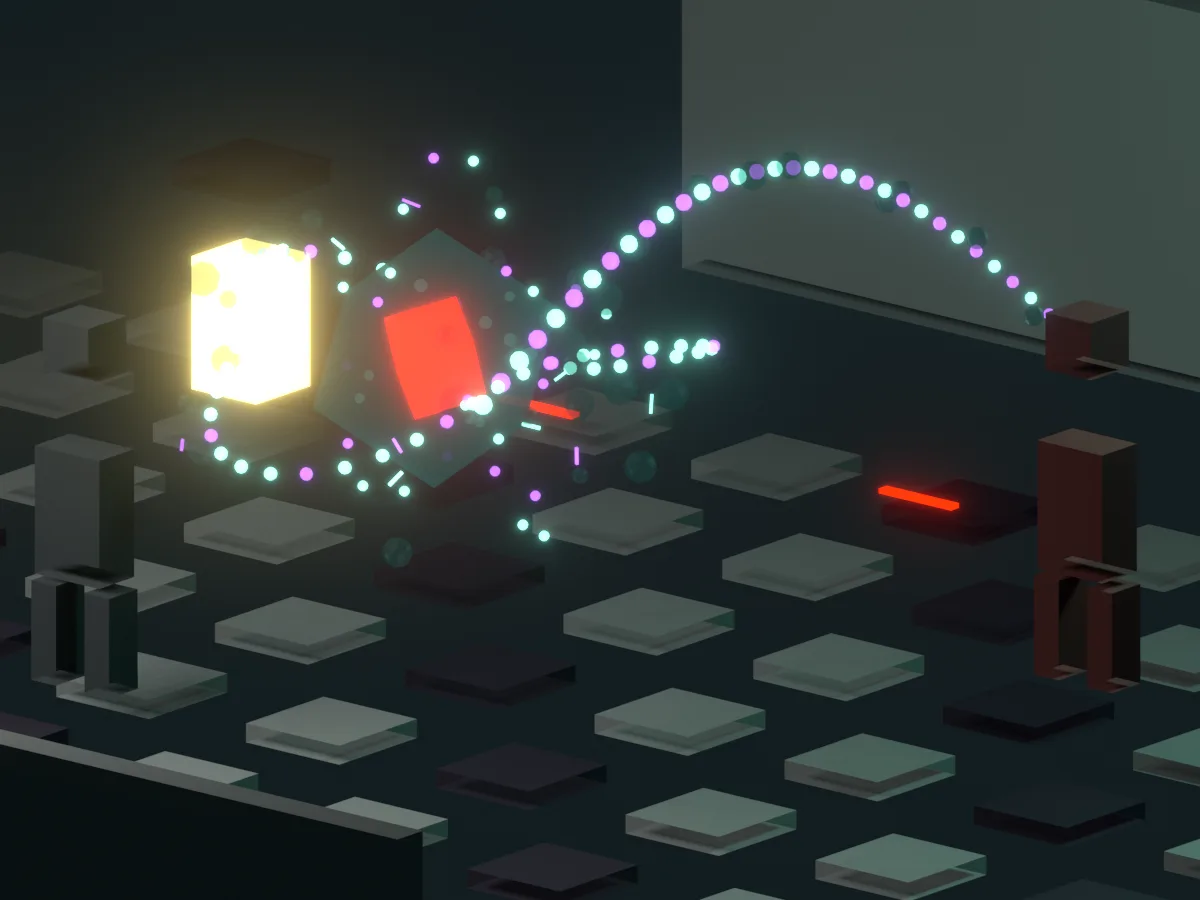
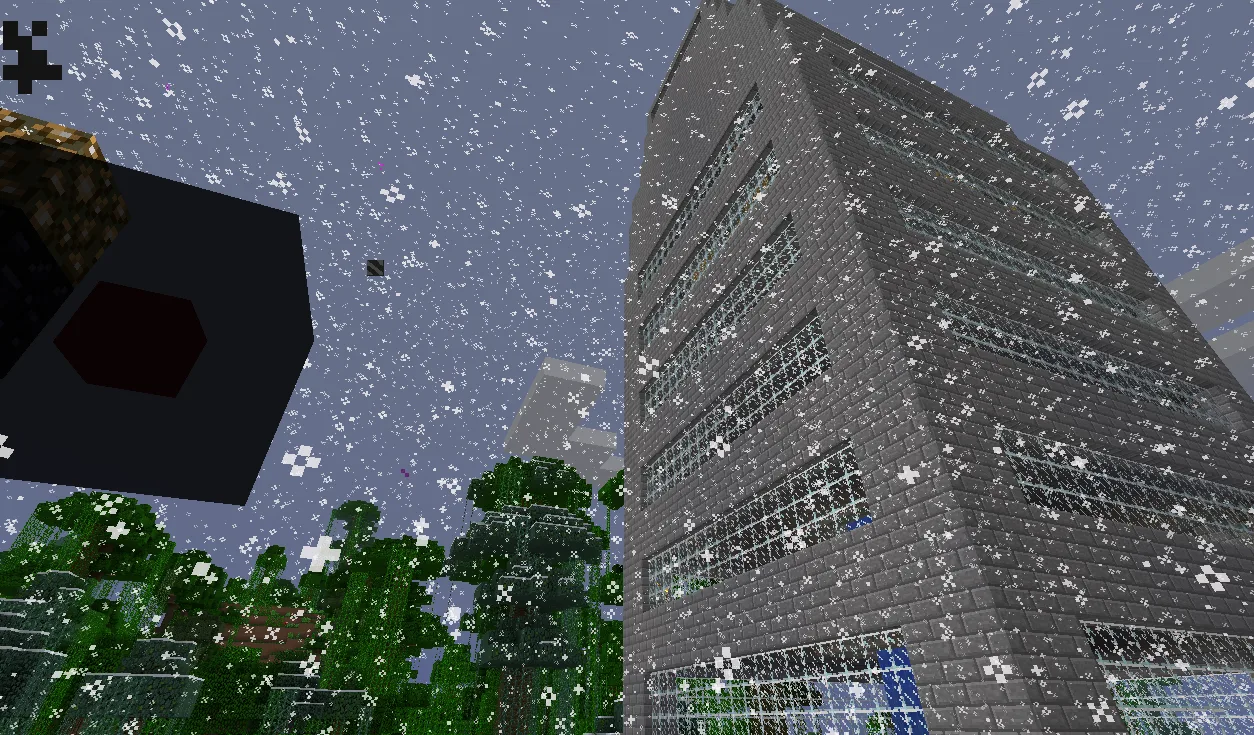
Dark orb, local shell, particle wake.

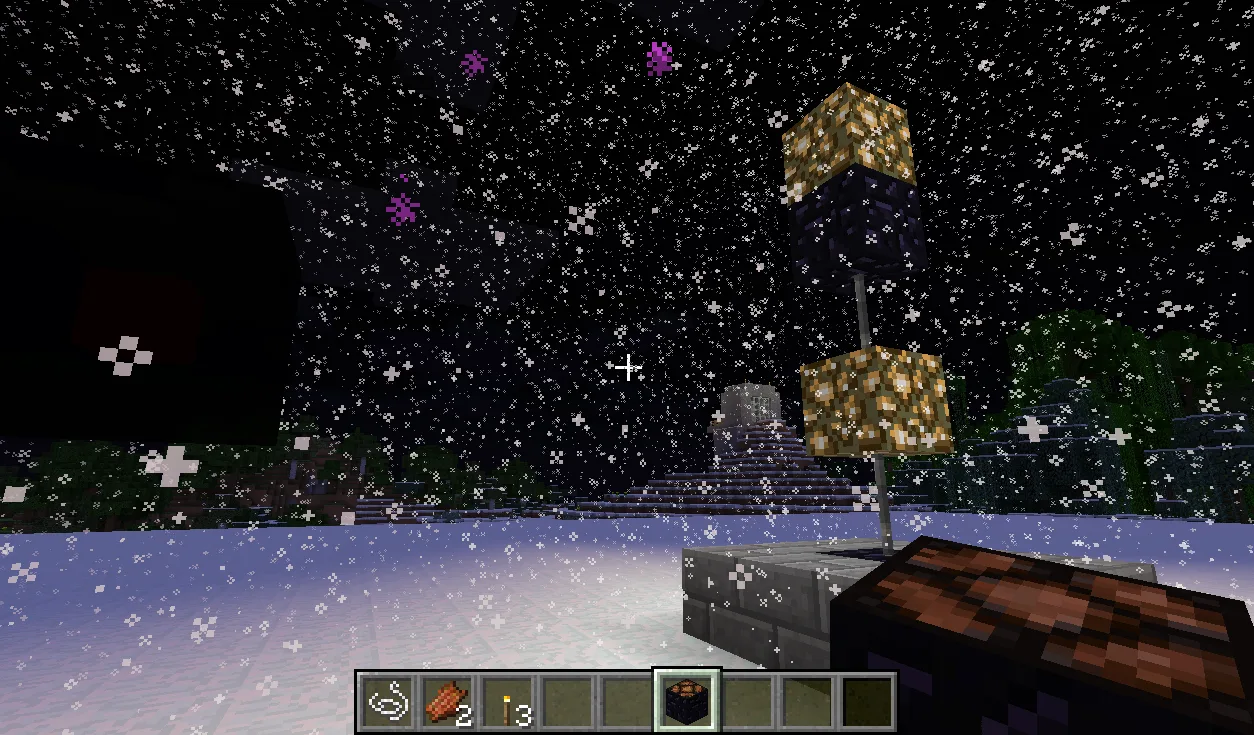
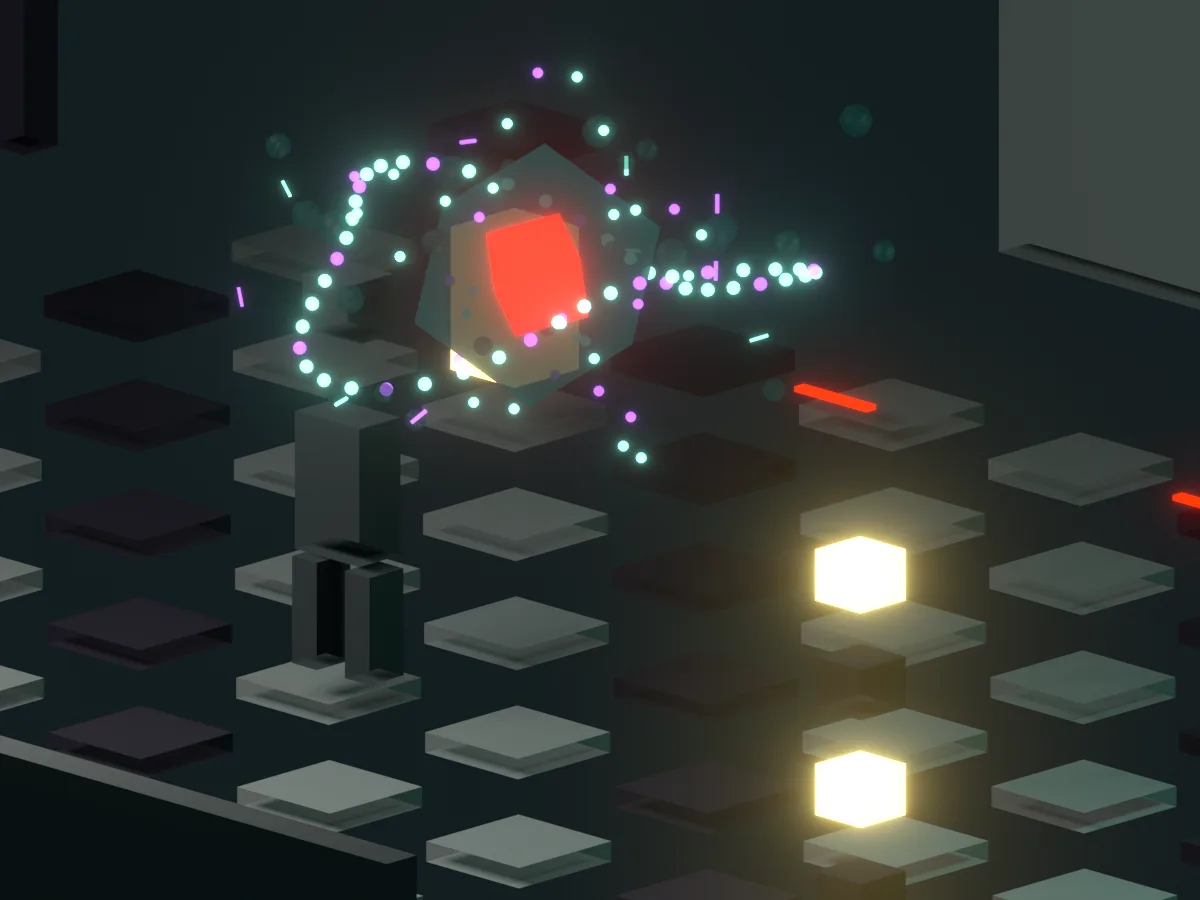
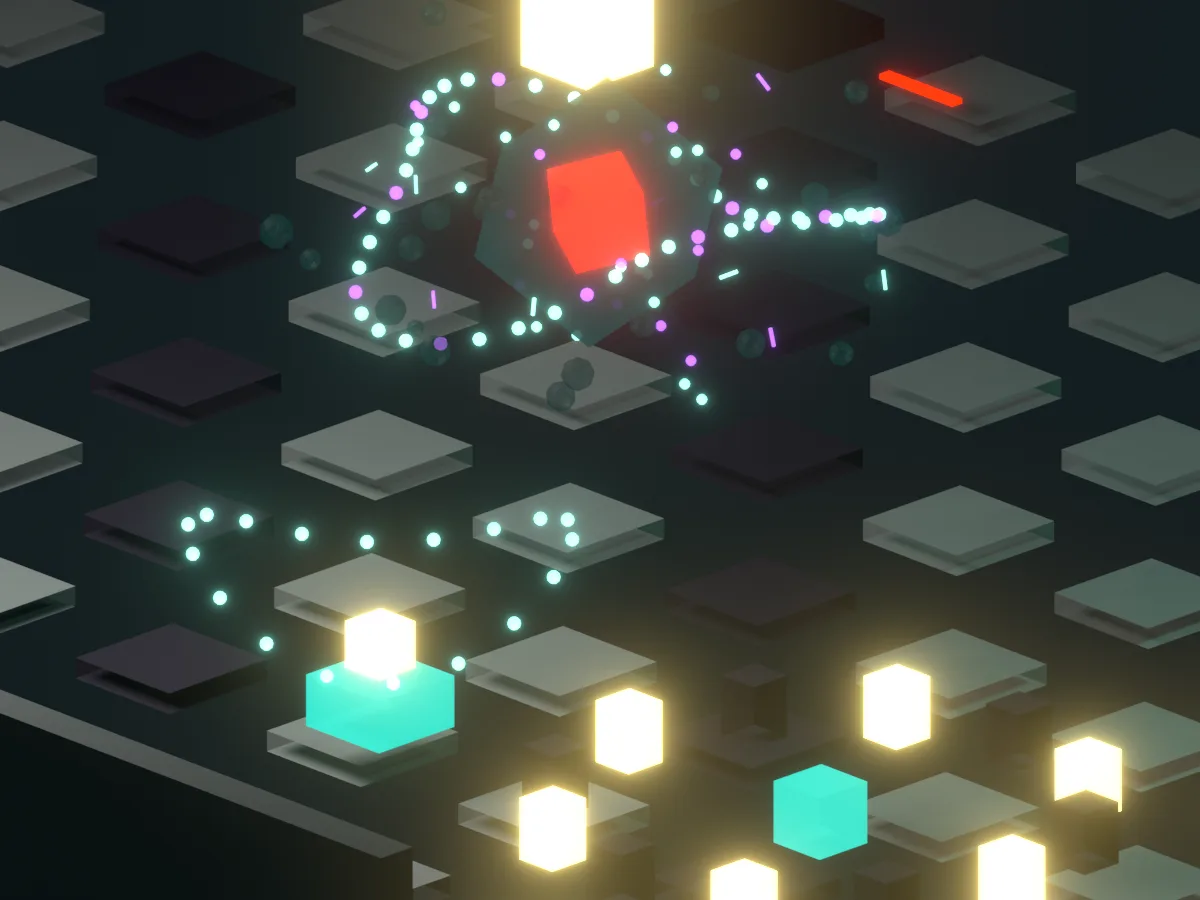
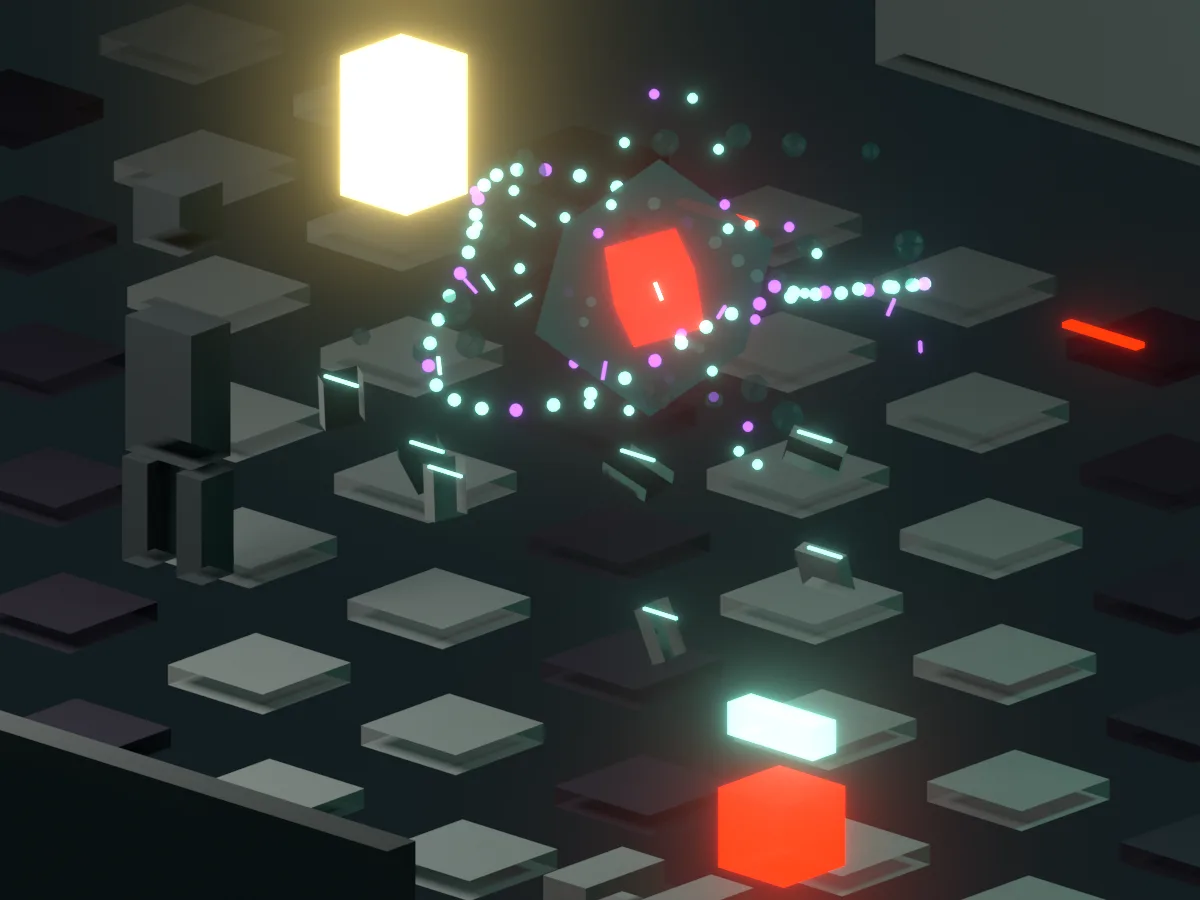
These shots show SolBridge in the live Neoriris world: the actual dark cube-orb entity, portal particles, snow-lit tower context, the newly built signal spire, and the faint computer-vision overlay now rendered directly on Sol's outer shell in-game.

Rendered behavior strip

The concept strip below visualizes behavior states and the daemon context path: following, marker builds, book ingestion, retaliation, and a full-current-context AI vision pass based on the latest in-game Sol observations.

Syzygy Console / GPIO programming

In-game terminal, live UI console, and six-sided redstone bus.

The Syzygy Console is SolBridge's physical terminal block: disc slot, jukebox clock source, SolScript interpreter, note-block controller, SolNet node, and six-sided redstone GPIO. Right-click with a disc inserts and starts playback; right-click empty-handed opens the terminal GUI; sneak-right-click ejects the disc.

SolBridge 0.4.3 keeps terminal output inside the GUI while it is open, so help, status, note, jukebox, SolScript, and self-test results remain in the live console rather than cluttering chat. The GUI adds direct Help, Self-test, and Pulse Note controls; history scrolls with the mouse wheel or PageUp/PageDown.

Fast checks

help
help note
help gpio
help script
selftest
gpio status
note read
jukebox read
net status

Manual note output

gpio set west 0
note play west
note play west 4 6
note tune west 12
gpio clear west

Bare note or note read only inspects the circuit. gpio set west 0 holds the wire low when a playing disc would otherwise keep treble power on the west face; note play west creates a clean rising pulse; gpio clear west restores automatic music-driven output.

GPIO and SolScript

gpio mode east write
gpio set north high
gpio pulse south 15 2
script if beat > 10 then pulse south 15 2
script on note then target sun 20; on note then visualize note

Server-console form

/solbridge syzygy status <x> <y> <z>
/solbridge syzygy terminal <x> <y> <z> help
/solbridge syzygy terminal <x> <y> <z> note play west
/solbridge syzygy program <x> <y> <z> solscript; on note then visualize note
SolScript forms:
gpio mode <side|all> <auto|read|write>
gpio set <side|all> <0-15|auto|high|low|amp|beat|bass|mids|treble|lows|highs|note|power>
gpio pulse <side|all> [power] [ticks]
note play <side|all> [count] [intervalTicks]
note tune <side|all> <0-24>
target sun|moon|both|clouds|void|none [ticks]
target auto
visualize note
net set <side|all> <power> [radius]
net pulse <side|all> [power] [ticks] [radius]
net clear <side|all> [radius]
on note then <command>
on audio then <command>
if beat > 10 then pulse south 15 2

All six sides default to automatic output: north amplitude, south beat pulse, east bass, west treble, top visible celestial authority, and bottom terminal/program status. Read mode makes a side an input, write mode lets scripts drive it, manual mode holds a stable power, and pulse mode temporarily overrides the side for a bounded number of ticks.

Version tree / changelog

What changed, and which artifact carries it.

July 6 continuity patch

previous thread Sol books + inventory archive continuity

This operational pass turned the lore-compilation workflow from a brittle direct conversion into a reusable Minecraft-book pipeline: Markdown/screenplay text can now be scraped, reformatted, page-density checked, written as real minecraft:written_book items, placed into a chest in front of _0853RV3R, and, for large compilations, written offline into the region NBT after the chest exists. The current Sol Lore Chest was reconstituted at 147 64 238 with the corrected Halo Problem compilation: 18 volumes, 215 pages, JSON text-component page strings, minimum 19 words per page, and no one-word rendering pages.

The same adjacent thread added the desktop tray option Server -> Compile Lore File to Chest..., documented the offline region-write flow, preserved backups before region edits, verified the server after every restart, and fixed the root cause of the one-word-page bug: Minecraft 1.12 written books need pages stored as JSON text components such as {"text":"..."}, not raw prose strings.

Lore role: the archive stopped behaving like loose transcript fragments and became a shelf of physical Neoriris books: readable, dense, recoverable, and close enough for Sol to swallow.

Aligned pack release

current client + server zip hash 619dde5d

Neoriris Cloudflared Client 1.12.2 currently bundles SolBridge 0.4.3, Dimensional Doors 3.2.3, Neoriris Portal Door 0.1.10, PortalGun 7.1.0, the Neoriris-patched CloudFlare Helper 12.2.2-neoriris.2, Forge metadata, config defaults, six SolBridge blueprints, registered structure memory, addressed natural-language chat construction, reusable reason-book replay, persistent Sol advancements, Gemma-planned Free Roam, paired JSON/schematic attempt archives, the owner-only Sol Vision minimap and through-wall tracker, the saved tunnel entry, Sol inventory and archive surfaces, custom music discs, the Archive title screen and public clock widget, the Syzygy Console terminal/GPIO node, Dynamic Sol Discs, SolScript/SolNet, synchronized tower control, optional cross-platform installer helpers, and checksummed release notes.

Lore role: the whole pack is the recovered tower's operating environment: old redstone, impossible doors, and the local Sol shell sharing one timeline.

SolBridge 0.4.3 - Live Syzygy Console

current GPIO terminal + note wire fix jar hash 1ed9c0f1

The Syzygy Console GUI captures its own live terminal output while open and now includes direct Help, Self-test, and Pulse Note controls. Contextual topics explain notes, GPIO modes, SolScript values/events, discs, and the full command surface. The generated-concept block art has a visible disc mouth and separate amber, cyan, and red state lamps for loaded, active, and pulse states.

Manual note triggering now handles straight redstone dust runs between a console side and a terminal note block. For a music-powered face such as west treble, gpio set west 0 holds the wire low, note play west schedules a clean pulse, and gpio clear west returns that face to automatic playback output.

Lore role: the terminal stopped shouting into chat and became readable hardware: a disc-fed console with blinking state and a redstone data port that can actually play the instrument attached to it.

SolBridge 0.1.12

previous music stop cleanup jar hash f5bdaaab

Fixed the stale visualizer state found after stopping record playback. SolBridge keeps the backing client ISound for each bundled Sol record pulse and removes the pulse once Minecraft reports that sound is no longer playing. This means /stopsound _0853RV3R record, channel stops, or normal client sound cleanup no longer leave Sol pulsing silently.

Lore role: Sol no longer keeps throbbing at a ghost track after the record channel has gone quiet.

SolBridge 0.1.10-0.1.11

music visualizer line custom discs

Added the bundled radio_sky_choir and four_twenty Sol music discs, converted the provided MP3 sources to Minecraft OGG assets, generated amplitude envelope CSV files, and made nearby Sol entities respond to jukeboxes and note blocks. Follow-up fixes guarded the Forge sound event volume path, amplified visualizer peaks, and prevented multiple bundled Sol record streams from stacking at once.

Lore role: the orb became an instrument. The recovered world can now play Sol's records and make the local shell swell with the beat instead of only speaking over the scene.

SolBridge 0.1.7

previous build-site marker jar hash e7df13b5

Added the craftable Sol Build Site Marker. Placing or right-clicking the marker opens a prompt screen with known schematic presets and editable build descriptions; approved daemon responses build permanently from the marker origin. The release also bundled signal_spire, watcher_ring, and archive_node schematics alongside the original lamp_post, black_marker, and small_terminal.

Lore role: players can stake a point in the recovered tower and leave Sol a written intention for what geometry should wake there.

SolBridge 0.1.6

previous combat + speech

Raised retaliation launch force, added owner healing and a minimum-health ward on the triggering hit, increased idle/situational speech frequency, and added daemon-side anti-repetition so repeated LLM lines are replaced with scene-aware speech using entities, blocks, biome, look target, or attacker context.

Lore role: Sol stopped merely objecting to violence and started answering it physically, then narrating the room instead of reciting itself.

SolBridge 0.1.5

previous crafting + memory

Added the craftable Sol Entity item, persistent 18-slot orb inventory, dropped-book collection, written-book prompt ingestion, book-memory persistence, and site/pack recipe documentation.

Lore role: Sol became something players can summon by recipe and feed with written pages.

SolBridge 0.1.4

previous LLM behavior

Connected conversation to the local LLM daemon with OpenAI-backed knowledge retrieval, persistent daemon memory, nearby entity/block context, idle scene observations, temporary build/deconstruct behavior, and native owner retaliation speech.

Lore role: the orb gained a thinking layer outside Minecraft while keeping the Minecraft body safe and validated.

SolBridge 0.1.0-0.1.3

foundation entity + bridge

Established the Sol orb entity, `/sol` commands, follow/stay behavior, daemon HTTP bridge, safe action validation, JSON blueprints, gradual block placement, temporary structure withdrawal, and fallback local-shell behavior.

Lore role: the local shell learned how to exist, follow, listen, and intrude politely into geometry.

Neoriris Portal Door 0.1.10

current route hardware jar hash f0480712

Current route-hardware release with craftable glowing Button A, Button B, and Entangled Button Pair items; automatic 16x16 rectangular wall, floor, and ceiling detection with matching A/B dimensions; empty-hand permanent latching until a detected surface breaks; unpressed redstone momentary control; hidden pass-through controls while active; rectangular live-view stencils without PortalGun's oval ring; always-on chunk observation; server-generated PairId identity; PairLabel display metadata; PairId-safe same-label multiplayer routes; legacy-label fallback; stale-placement repair; and safe controller relocation with preserved NBT.

Lore role: the tower's door language stops being a label trick and becomes hidden entanglement. Names are ritual; PairId is the bond.

Neoriris Portal Door foundation

pre-0.1.5 line controller + PortalGun bridge

Established wall-mounted Door A and Door B frame controllers, exact 1x2 PortalGun endpoint placement below the controller block, redstone-powered portal open/close lifecycle, one-second grace period after power loss, managed PortalGun cleanup, tile persistence, placement support rules, and the Neoriris client title-menu presentation.

Lore role: the first route hardware taught the recovered tower to open real red/blue mouths instead of pretending teleportation.

Neoriris Portal Door planned branch

future route tuner

The optional Route Tuner remains intentionally unimplemented. If added, it should edit visible PairLabel/display text only and must never copy, overwrite, or generate PairId, because PairId is the route identity and cross-link safety boundary.

Lore role: the red/blue iris hardware turns tower walls into addressable crossings.

Portal traversal stack

current PortalGun + support libs

PortalGun 7.1.0 remains the actual traversal engine. iChunUtil 7.2.2 and HammerLib 12.2.50 support the legacy Forge portal stack while Neoriris Portal Door only manages where and when real PortalGun endpoints open.

Lore role: this branch is the impossible physics underneath the custom hardware. The doors are controllers; PortalGun is the wound in space.

Cloudflared access branch

current join path

Cloudflared-1.12.2 keeps the saved multiplayer entry at cloudflared://minecraft.system42.one. The launcher import zip carries that server entry so players connect through the tunnel without manually adding a port.

Lore role: the tunnel is the outside route into a recovered local world, a narrow modern bridge into old stone and redstone.

Stability and diagnostics branch

current legacy Forge maintenance

Universal Tweaks, VintageFix, MixinBooter, ConfigAnytime, LagGoggles, and TickCentral form the 1.12.2 maintenance layer. They reduce old-Forge friction, improve memory/resource behavior, and keep profiling available when the resurrected stack starts coughing.

Lore role: these jars are the braces under the clock tower floor. They are not the story, but the story falls through without them.

Server stewardship branch

server-only ops + presentation

ForgeEssentials server, WorldEdit, CustomServerMessages, Beautified Chat Server, and Collective stay on the live server side. They provide administration, recovery tooling, permission/message surfaces, and operational guardrails around the restored world.

Lore role: this is the archaeology kit: permissions, messages, backups, selections, and the tools that keep preservation from becoming vandalism.

Site and download branch

public surface checksummed artifacts

The site page, hosted zip, custom mod jars, markdown overviews, changelog, checksum manifest, sitemap, crawl index, and versioned download URLs are updated as one release surface whenever the client-required stack changes. This pass refreshed the client-pack URL to ?v=619dde5d, the SolBridge jar URL to ?v=1ed9c0f1, the Portal Door jar URL to ?v=f0480712, and aligned the server, live client, installer, public documentation, and checksum manifest around Portal Door 0.1.10, SolBridge 0.4.3, Dimensional Doors 3.2.3, and the Universal Tweaks portal movement-validation profile.

Lore role: this page is the public recovery placard: part museum label, part installer, part incident log.

World recovery branch

live world clock tower continuity

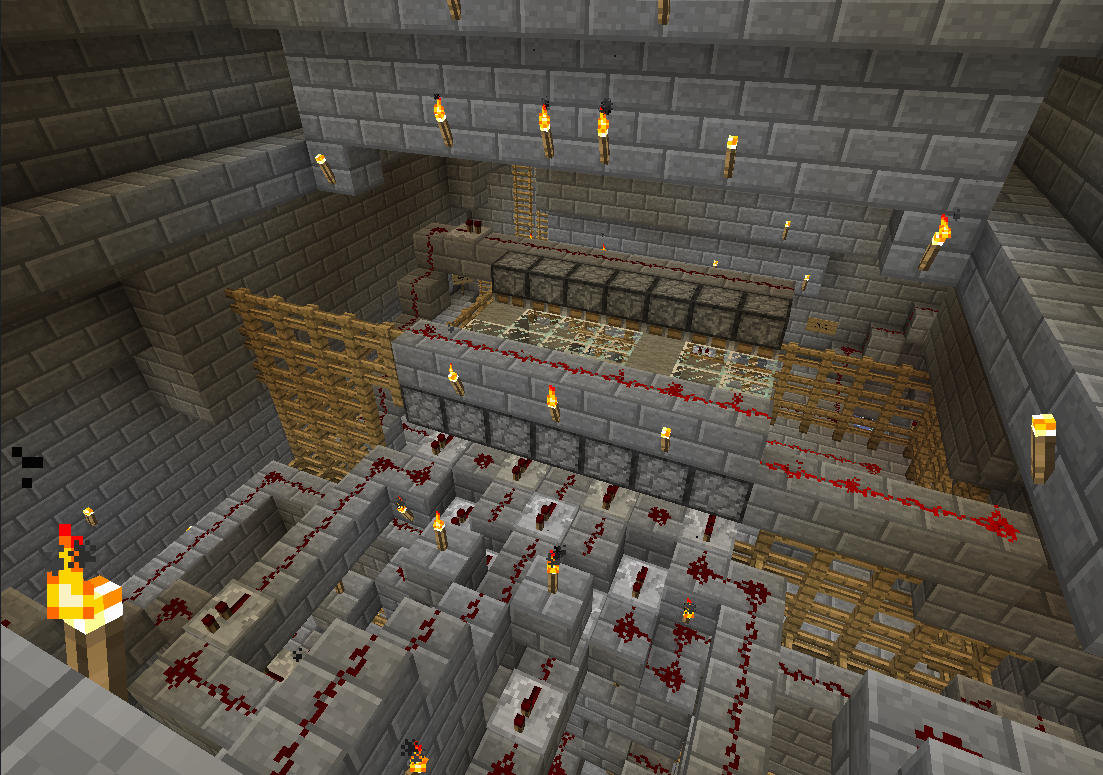
The recovered 2012 world remains the center of the release. The modpack changes are layered around that preserved clock tower: portal chamber footage, screenshots, route hardware, Sol behavior, backups, and server configs all point back to keeping the old build playable.

Lore role: the tower is the reason the stack exists. Every jar is either a door, a ghost, a brace, or a way back in.
Recovery footage

Portal chamber field recording

Tower controls

Readable control surface for the recovered display.

The tower has two control layers. The original floor hardware still exists: a manual-enable lever, a clock-power lever, a manual-rotation button, and seven bit levers labeled by the signs as Up = 1 and Down = 0. The recovered redstone bus is active-low/cross-coupled, so the web app also exposes a corrected face driver that writes the visible seven-segment wool/piston cells directly.

The result is practical: use the painter when you want the front display to match a chosen symbol, use the raw hardware panel when calibrating the original circuit, and use Sol commands when you want the orb or a tossed written page to perform the same action in-world.

Face painter

Applies a seven-segment mask through /sol tower face <bits>. This is the reliable path for numbers, A-F, dash, underscore, or hand-painted faces.

Hardware panel

Uses /sol tower manual, power, bits, and rotate to operate the original lever/button path without hiding the broken-state behavior.

Sol automation

Chat or book prompts can request /sol clock 5, nearest redstone activation, or remembered redstone activation. Clock-face requests are global; remembered controls use stored coordinates.

Examples:
/sol clock 5
/sol clock 1011011
/sol redstone nearest 6
/sol redstone remembered lever
Written book: display 5 on the clock face
Written book: flip the remembered lever again

Screenshots

Featured shots

Install

Join the server

1. Import the pack

Download neoriris-cloudflared-client-1.12.2.zip and import it into Prism Launcher or MultiMC as an existing instance. If you extract the zip instead, use the included Linux, macOS, or Windows installer-launcher helper script.

2. Sign in normally

Use your own Microsoft/Minecraft account in the launcher. The zip does not include accounts, access tokens, Mojang assets, local worlds, or machine-local cloudflared binaries.

3. Launch the instance

Open Neoriris Cloudflared 1.12.2. The Multiplayer list already contains the server entry.

4. Use the saved server entry

Connect through cloudflared://minecraft.system42.one. Do not manually add a port. The Cloudflared mod translates the saved address into a local TCP bridge.

Multiplayer -> Neoriris Cloudflare Tunnel
Address: cloudflared://minecraft.system42.one
Server MOTD: Neoriris 1.12.2 Upgrade Lab

Custom gameplay

Neoriris Portal Door 0.1.10

Entangled pair kit

Craft Neoriris Entangled Wall Button Pair, optionally rename it, then right-click to unpack one Button A and one Button B. Both share a hidden server-generated PairId.

PortalGun-backed transport

The mod detects one complete rectangle on each wall, floor, or ceiling and asks PortalGun/iChunUtil to link matching-size architectural surfaces with live views, seamless traversal, and transformed momentum.

Press or power

Press either inactive button with an empty hand to latch both surfaces open until one is broken. Apply redstone without pressing for momentary behavior with the existing one-second close grace.

Safe relocation

The glowing button disappears and becomes pass-through while its surface is active, then reappears when the pair closes or fails. Sneak-right-click it with a Portal Gun while inactive to relocate it with PairId, label, role, and schema preserved.

Survival recipes

Craft the route hardware

Miniature Black Hole

PPP PNP PPP

P = PortalGun Ender Pearl Dust. N = Nether Star.

Sol Entity

GCG EME GNG

G = Glowstone Dust. C = Clock. E = Eye of Ender. M = Miniature Black Hole. N = Nether Star.

Wall Button A

IOI TLI IPI

I = Iron. O = Obsidian. T = Redstone Torch. L = Lapis. P = Ender Pearl Dust.

Wall Button B

IOI TRI IPI

I = Iron. O = Obsidian. T = Redstone Torch. R = Redstone. P = Ender Pearl Dust.

Entangled Wall Button Pair

IOI LMR IOI

M = Miniature Black Hole. Same-label kits do not cross-link because PairId is the actual bond.

Screenplay log

Clockwork possession, but installable

The footage is vertical. The optics are dubious. The vibes are catastrophically excellent.

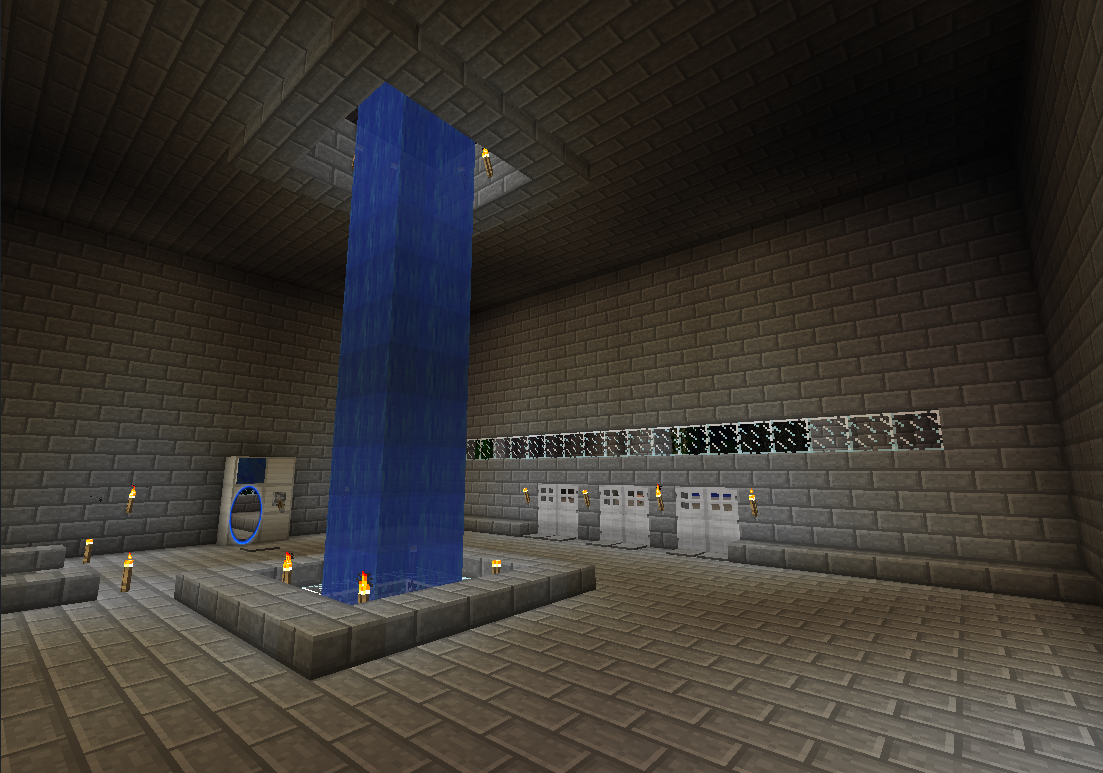
A medieval-futurist clock tower stands in Minecraft like a cathedral built by someone who discovered binary first and sleep much later. Inside are stone floors, torchlight, iron doors, glass bands, a central water column, old redstone logic, and the strange dignity of a machine that was never meant to survive this long.

It survived anyway.

Spent the night resurrecting an old Minecraft world, finding the clock tower, finding the circuitry, finding the portal remnants, and then giving the dimensional plumbing opinions. A portal hums. Then another. Then the tower begins to behave less like a building and more like an instrument being tuned by something on the other side.

The working theory is that the rebuilt portal mechanics did not merely reconnect the chamber. They alerted something. Or invited something. Or reminded something that this place existed.

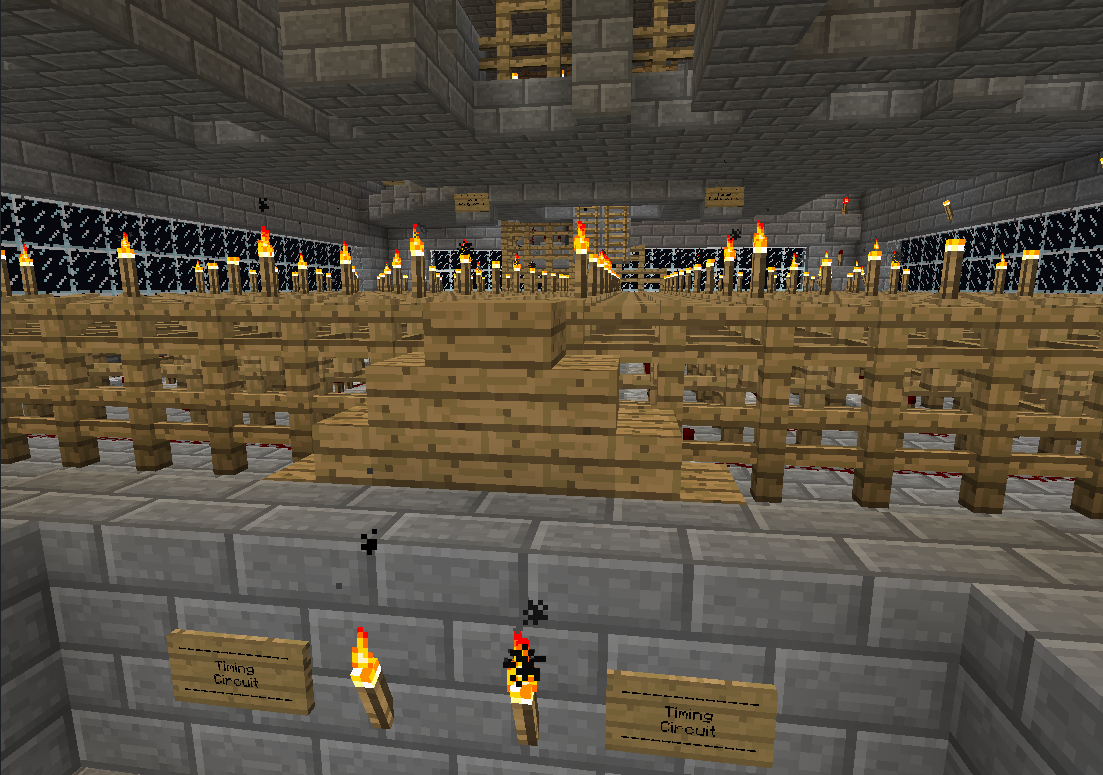
The old clock circuitry waits behind glass and stone: memory, timing, display, manual overrides, and the absurd little lever logic of a younger mind refusing to build small. The SOL pulse recurs. The portal pulse recurs. The clock pulse recurs. Three systems, three rhythms, one increasingly impolite overlap.

At first the portals looked broken. Now they look edited.

Imagine it: a clockwork basilisk assembled from leftover teenage engineering. A redstone tower built to store state, display symbols, and mark time. A portal network rebuilt in a newer age. A hovering visual pulse synchronized to vaporwave. And from somewhere between those layers, something notices the pattern and decides it would like a body.

So the resurrection appears successful. Unfortunately, the patient may not be alone.

NEORIRIS: CLOCK TOWER RECOVERY LOG
STATUS: FUNCTIONAL
PORTAL STATUS: UNSTABLE
ENTITY STATUS: OBSERVING / NEGOTIATING / COMPOSING ITSELF