Castable media
Text, status pages, notifications, RGB565 images, QR codes, and silent video frames can be pushed through the shared Sol broadcast-display interface.
LILYGO T-Dongle-S3 / ESP32-S3
A thumb-drive-shaped development board rebuilt as an authenticated wireless display, cast target, physical-event source, bounded LCD/LED animation player, and electrically safe universal GPIO node for the main Sol system.
ZIP 2,057,795 bytes / SHA-256 823c1078b6852b694c0e379c377e545332246dac8543a00f6073886e4f17503d
The firmware treats the board as a constrained capability appliance rather than a generic remote computer. It announces what it can do; Sol decides how to use it.
Text, status pages, notifications, RGB565 images, QR codes, and silent video frames can be pushed through the shared Sol broadcast-display interface.
The onboard button and watched GPIO transitions report duration, edge, logical name, monotonic timestamp, and sequence number into the Sol event bus.
Button and GPIO activity receives immediate on-device feedback, then fades back to the default status screen. Desktop and private phone responses stay synchronized.
Up to 24 bounded steps can coordinate LCD status, lines, progress, QR, and APA102 color without network-timed jitter. The declarative format cannot run code or touch GPIO.
GPIO43 and GPIO44 begin high-impedance, then apply a validated internal-pull-up button profile. Read, watch, pulse, PWM, UART, I2C, failsafe, and port.safe remain permission-gated.
Six remembered networks, primary-profile grace, DHCP, mDNS, authenticated outbound WebSocket, reconnect backoff, event buffering, telemetry, and OTA survive ordinary power cycles.
The Unified Clock supplies display, LED patterns, timeline editing, GPIO, media, power-profile, response, and safety controls without exposing node credentials to browser JavaScript.
These are direct crops from the C615 verification camera and the live Unified Clock interface. Captions distinguish physical observation from software-reported state.
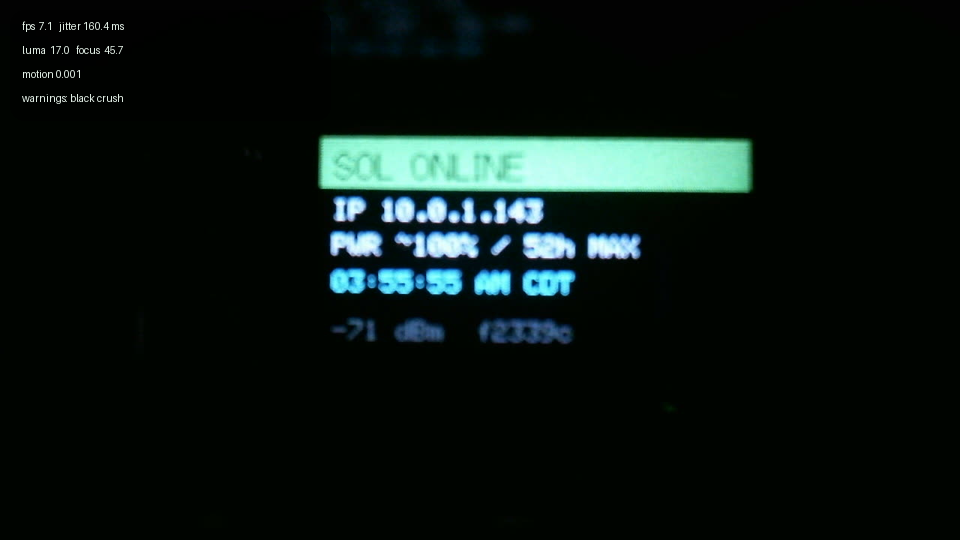
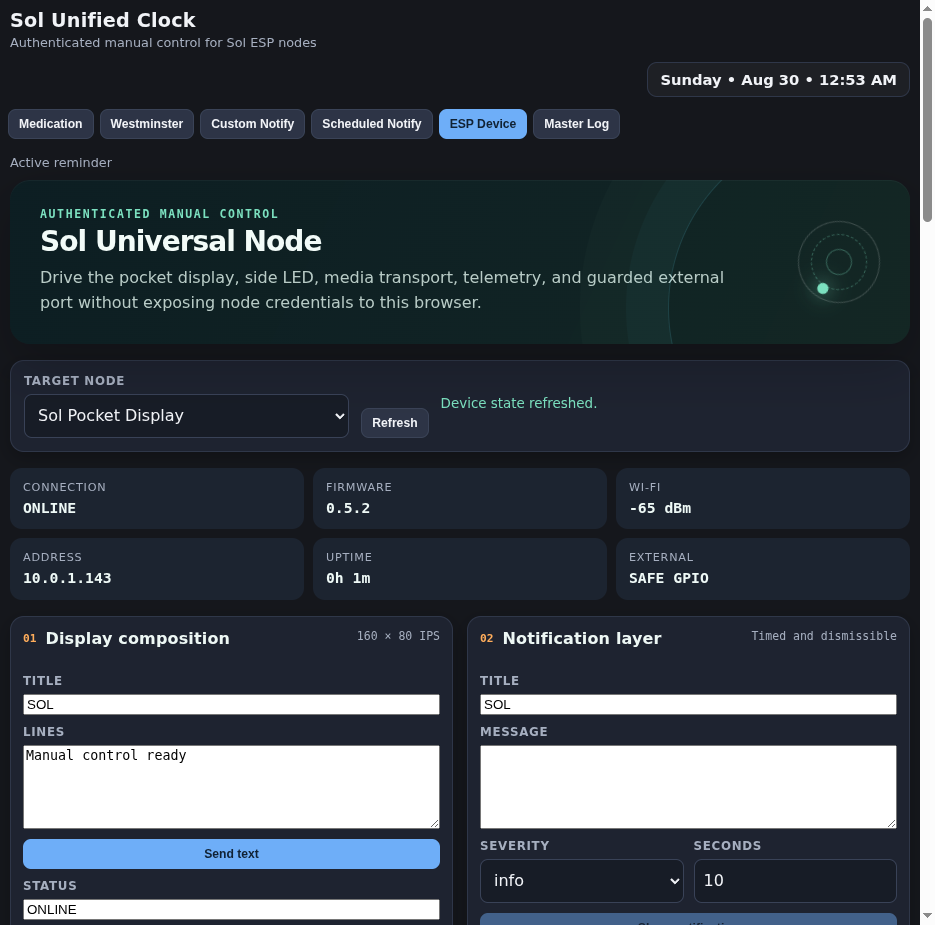
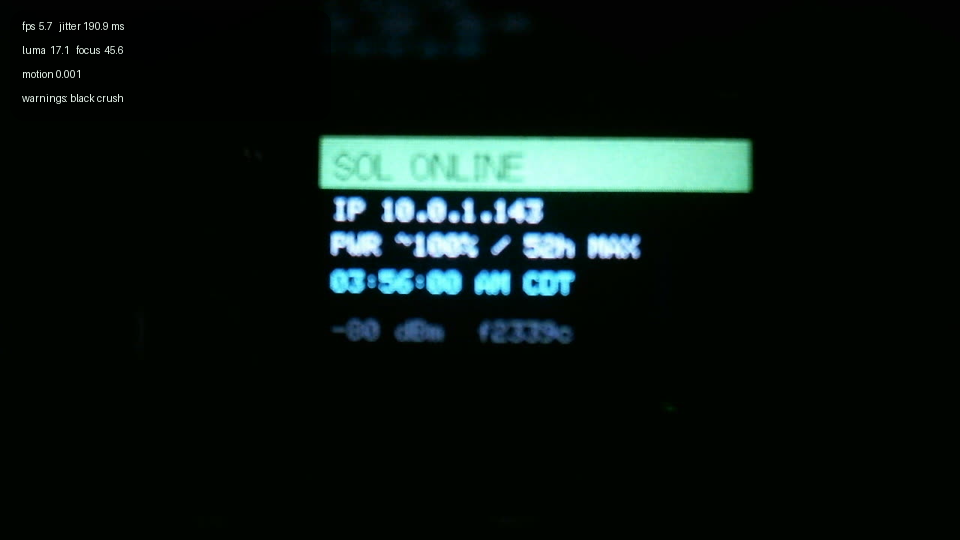

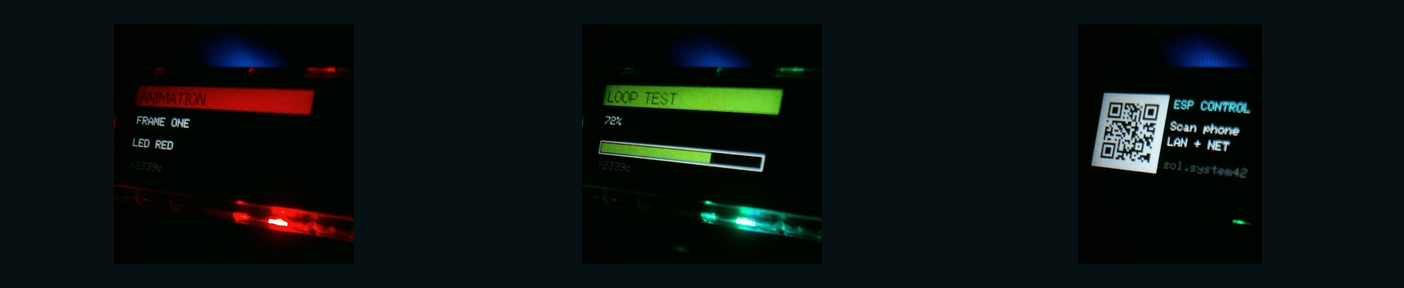
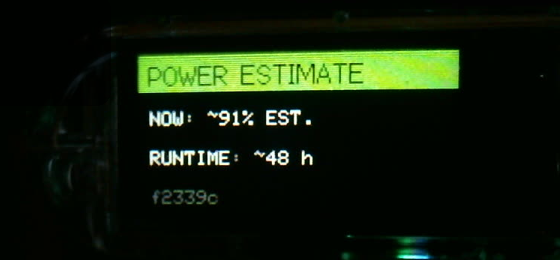
~91% EST. and ~48 h; later frames explain that this is inferred, not battery telemetry.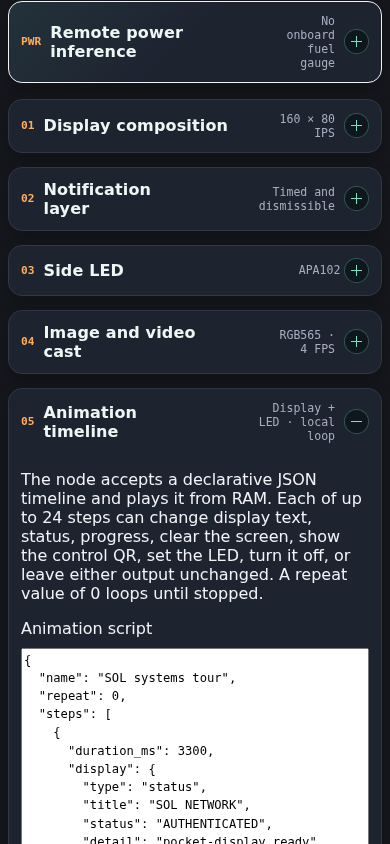
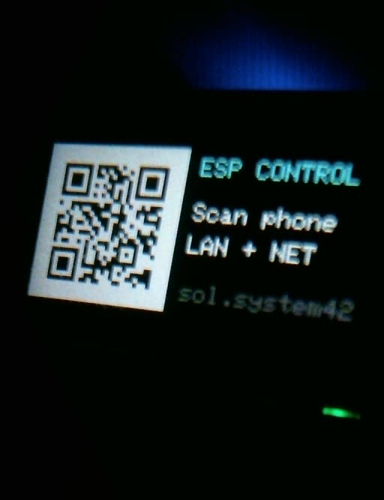
https://sol.system42.one/e; it contains no node secret or Wi-Fi credential.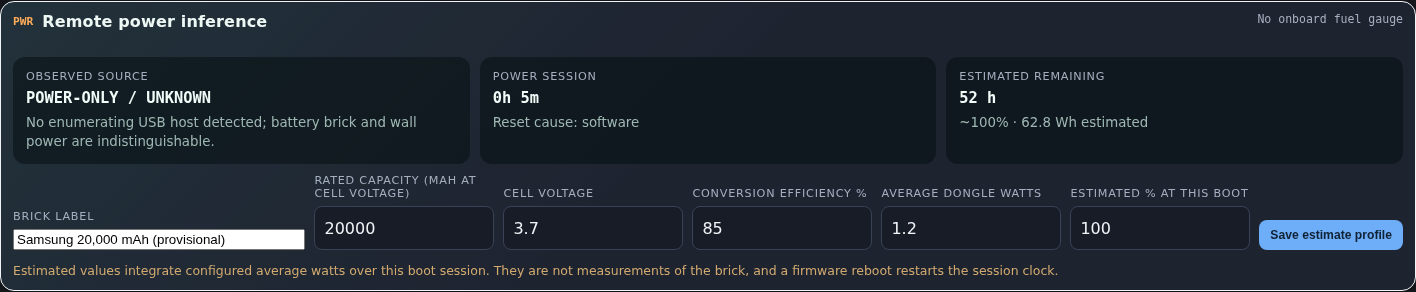
The interface deliberately separates configured specifications and inferred runtime from measurements the hardware can actually observe.
The browser never receives device credentials. All control enters through the protected host API and the node maintains the outbound authenticated session.
OTHER SOL SKILLS        UNIFIED CLOCK        PRIVATE PUSH / NOTIFIER
       \                     |                         /
        +------------- SOL HOST EVENT BUS ------------+
                              |
                    sol-node-daemon + registry
                              |
                  HMAC-authenticated WebSocket
                              |
        +---------------- T-DONGLE-S3 ----------------+
        | LCD | APA102 | GPIO0 | GPIO43/44 | telemetry |
        +------------------------------------------------+
Public source release
The archive contains the ESP32-S3 firmware, authenticated Linux daemon, protocol documentation, host integration, service units, tests, deployment scripts, selected physical evidence, and a generic 0.7.3 firmware binary.
Sanitized for public release: no Wi-Fi credentials, enrollment secrets, live registry, provisioned NVS state, full-flash recovery image, virtual environment, build cache, or redundant raw camera collection.